



Diabetes, Kidney Failure, Gratitude & a Great Big Comeback
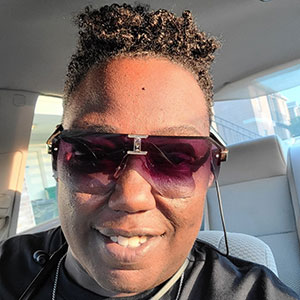
As a child growing up in Texas, Trinai Jamison spent most afternoons hanging out with a group of her neighborhood friends. They preferred talking around the picnic table to playground games or sports, and would sip sodas and eat junk food while they chatted.
“We were never really taught about fitness or nutrition and, unfortunately, those same habits transferred into adult life,” Trinai explains. “When I started working, If I needed something to eat I’d grab fast food, chips, or a soda. And I continued not to exercise.”
Trinai didn’t realize her choices were putting her health at risk—especially since her mother and grandmother were both diabetic. Many years later, she has come to appreciate the benefits of healthy eating and exercising. She also recognizes that self-care is critical to physical and emotional well-being and wants others to learn from her experience.
“You’ve got to make time for yourself,” she says with passion. “That’s vital to self-love. You’ve got to slow down and take care of your needs first.”
“We were never really taught about fitness or nutrition and, unfortunately, those same habits transferred into adult life,” Trinai explains. “When I started working, If I needed something to eat I’d grab fast food, chips, or a soda. And I continued not to exercise.”
Trinai didn’t realize her choices were putting her health at risk—especially since her mother and grandmother were both diabetic. Many years later, she has come to appreciate the benefits of healthy eating and exercising. She also recognizes that self-care is critical to physical and emotional well-being and wants others to learn from her experience.
“You’ve got to make time for yourself,” she says with passion. “That’s vital to self-love. You’ve got to slow down and take care of your needs first.”
Living with Diabetes and Making Tough Choices
With her diet and family history working against her, Trinai was diagnosed with diabetes in 2005. But as a single mom with a school-age daughter, she couldn’t afford the time and expense of medications and doctor visits.
“I wasn’t feeling sick, and it was more important to go to work and take care of the bills,” Trinai explains. “It was either pay for healthcare or feed my child.”
Trinai had chronic migraine headaches (a diabetes symptom) for the next several years but didn't know why. She took high doses of over-the-counter pain medicines, not realizing they were harmful to her kidneys. When she could afford to see a doctor, Trinai didn’t feel knowledgeable enough to ask questions about her kidney health. Not knowing what else to do, she did almost nothing to improve her condition—a decision she came to regret.
“I wasn’t feeling sick, and it was more important to go to work and take care of the bills,” Trinai explains. “It was either pay for healthcare or feed my child.”
Trinai had chronic migraine headaches (a diabetes symptom) for the next several years but didn't know why. She took high doses of over-the-counter pain medicines, not realizing they were harmful to her kidneys. When she could afford to see a doctor, Trinai didn’t feel knowledgeable enough to ask questions about her kidney health. Not knowing what else to do, she did almost nothing to improve her condition—a decision she came to regret.
Getting Kidney Care, Getting on Dialysis, Getting Better
In 2013, Trinai learned her kidney function was dangerously low. She was supposed to see a nephrologist but was in the middle of relocating, so the move and a job hunt took priority.
After moving to Houston, Trinai’s health continued to decline. One difficult night, her best friend brought her to the emergency room at an area hospital. There she met a compassionate doctor who decided to take Trinai on as a patient even though she had no insurance at the time. He taught Trinai about end stage renal disease, explained how dialysis would help her feel better, and convinced her to have a fistula implanted. Trinai was (and is) extremely grateful. Still, concerns about missing work and a fear of needles made her reluctant to start treatments. But before long, she had almost no choice.
“I was back in the hospital, and they told me I was going into renal failure,” Trinai recalls. “I decided to give dialysis a try. After my first treatment, I said, ‘That was it?’ It wasn’t scary. I was so relieved.”
Trinai started with in-center hemodialysis (HD) and found a Fresenius Kidney Care dialysis center in her new city, Harker Heights, Texas. She is extremely thankful that’s where she landed.
“Fresenius Kidney Care is an empowerment center,” says Trinai with gratitude. “It was hands-on. They taught me how to do my own vitals, work my own machine, and encouraged learning self-cannulation. What I learned about self-cannulating is, if it hurts, you know it and can slow down and adjust the angle of the needle. I tried it and the needle slid right in, and I’ve been cannulating myself ever since.”
After moving to Houston, Trinai’s health continued to decline. One difficult night, her best friend brought her to the emergency room at an area hospital. There she met a compassionate doctor who decided to take Trinai on as a patient even though she had no insurance at the time. He taught Trinai about end stage renal disease, explained how dialysis would help her feel better, and convinced her to have a fistula implanted. Trinai was (and is) extremely grateful. Still, concerns about missing work and a fear of needles made her reluctant to start treatments. But before long, she had almost no choice.
“I was back in the hospital, and they told me I was going into renal failure,” Trinai recalls. “I decided to give dialysis a try. After my first treatment, I said, ‘That was it?’ It wasn’t scary. I was so relieved.”
Trinai started with in-center hemodialysis (HD) and found a Fresenius Kidney Care dialysis center in her new city, Harker Heights, Texas. She is extremely thankful that’s where she landed.
“Fresenius Kidney Care is an empowerment center,” says Trinai with gratitude. “It was hands-on. They taught me how to do my own vitals, work my own machine, and encouraged learning self-cannulation. What I learned about self-cannulating is, if it hurts, you know it and can slow down and adjust the angle of the needle. I tried it and the needle slid right in, and I’ve been cannulating myself ever since.”
Finding Confidence and Independence with Solo Home Hemodialysis
After conquering needle sticks, Trinai felt more empowered than ever. She told her care team she wanted to travel more, and they suggested home hemodialysis (HHD), which offers transportable dialysis machines and other health and lifestyle benefits. Trinai decided to check it out. At her center, she tried more frequent HD (the same prescription for many on HHD) for a week and felt better than she had in a long time.
“There were times after in-center treatments when I couldn’t even go to the store,” Trinai explains. “I mean, I physically couldn’t do it. My third day of more frequent HD, I went straight to Walmart and walked around the whole place. After that, there was no turning back.”
Trinai trained for solo HHD (self-treatments done without a care partner) in 2019 and says it changed her life. She’s taking trips, socializing more, and no longer needs her daughter (now 21) to come over and help with housework. Trinai has also gone from asking favors of her own mother to granting them.
“My mom saw the difference in my energy, and started asking me to drive her around, instead of the opposite,” she says with a smile.
“There were times after in-center treatments when I couldn’t even go to the store,” Trinai explains. “I mean, I physically couldn’t do it. My third day of more frequent HD, I went straight to Walmart and walked around the whole place. After that, there was no turning back.”
Trinai trained for solo HHD (self-treatments done without a care partner) in 2019 and says it changed her life. She’s taking trips, socializing more, and no longer needs her daughter (now 21) to come over and help with housework. Trinai has also gone from asking favors of her own mother to granting them.
“My mom saw the difference in my energy, and started asking me to drive her around, instead of the opposite,” she says with a smile.
Lessons Learned—and Taught
Thankful to have her life back, Trinai now takes better care of herself. She gets regular exercise and has worked with her dietitian to ensure she is eating well. With help from bariatric surgery, she’s seen significant weight loss. Her goals are to keep losing weight, stay healthy, and get a kidney transplant when the opportunity comes.
Though she’s been through hard times, Trinai feels fortunate and takes every opportunity to pay it forward. She helps special needs adults participate in various activities and, as a patient advocate, educates others about the benefits of HHD and the dangers of diabetes.
“It’s so important to educate yourself about health issues,” Trinai says. “I learned too late that diabetes can be a silent threat. I didn’t feel the symptoms. Lots of people with diabetes don’t feel bad or don’t want to admit they’re sick. I say, ‘Look at me. I’m your example. Take care of yourself.’”
Though she’s been through hard times, Trinai feels fortunate and takes every opportunity to pay it forward. She helps special needs adults participate in various activities and, as a patient advocate, educates others about the benefits of HHD and the dangers of diabetes.
“It’s so important to educate yourself about health issues,” Trinai says. “I learned too late that diabetes can be a silent threat. I didn’t feel the symptoms. Lots of people with diabetes don’t feel bad or don’t want to admit they’re sick. I say, ‘Look at me. I’m your example. Take care of yourself.’”
Suggested topics
Managing Blood Sugar and Chronic Kidney Disease
If you are living with diabetes and kidney disease, it is important to stay in control of your blood sugar so you can be your healthiest and avoid other...
Staying Strong: Home Dialysis Fits a Professional’s Busy Schedule
Michael Roberson of Louisville, KY knows how to stay busy and keep himself motivated! After being diagnosed with end-stage renal disease (ESRD) in 2009, Mike was determined to find a way to take care of his health
Read Michael’s Story